OccuPros Safety Academy | Online Theory
Vacuum Excavation (Hydro and Air Vac) Safety
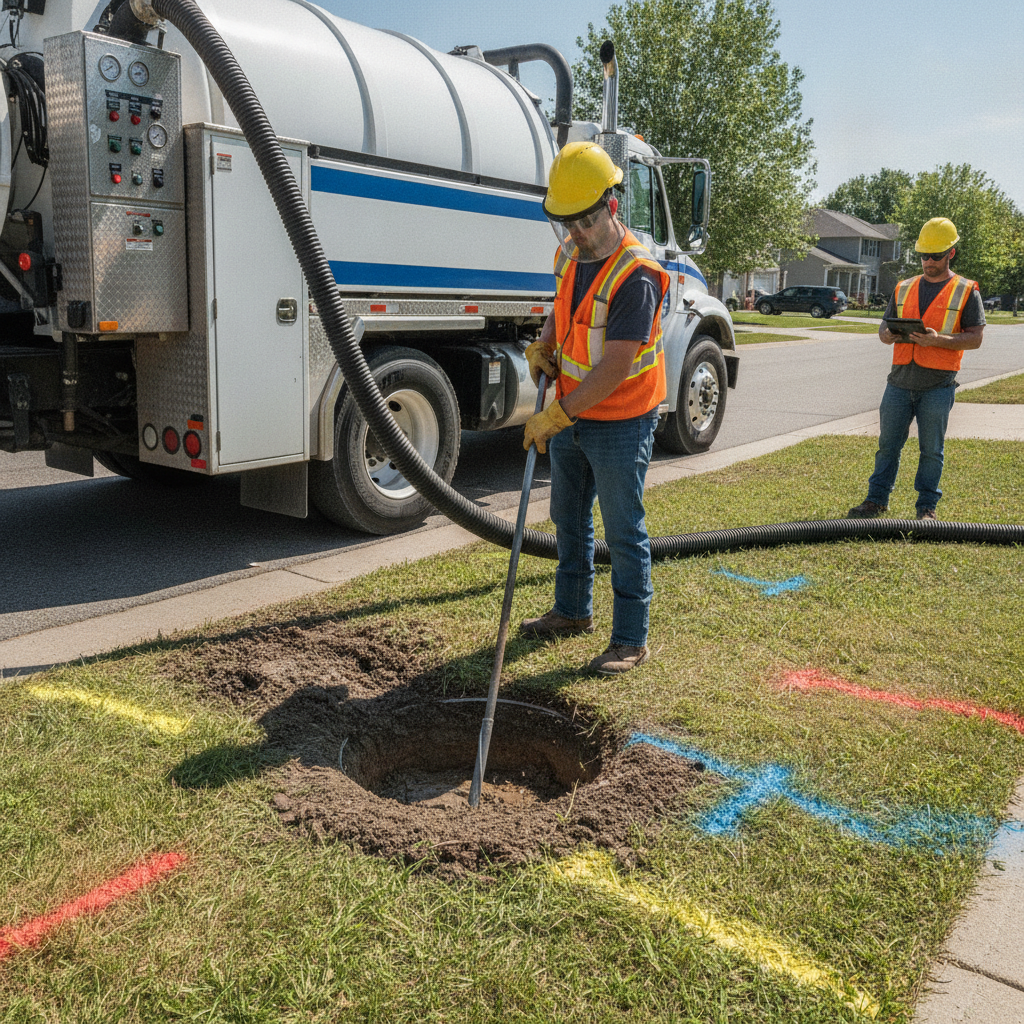
The safest way to dig near a buried line is to barely dig at all. Vacuum excavation lets you uncover gas, power, water, and fiber without a blade ever touching them, and this course shows you how to do it without trading one hazard for another.
Somewhere under almost every jobsite is a web of buried utilities: gas lines that can level a block, power feeds that can kill on contact, water and sewer mains, and fiber that carries a whole neighborhood’s phones and hospitals. For decades the only way to find them was to dig with a backhoe and hope the locate marks were right. They were not always right, and the result was a steady stream of struck lines, gas explosions, electrocutions, and outages. Vacuum excavation changed that. Instead of a steel bucket tearing blindly through the soil, it loosens the ground gently with pressurized water or compressed air and sucks the loose material away into a tank, so you can see and expose the line with almost no chance of damaging it.
That is why vacuum excavation, also called soft digging or potholing, has become the preferred method for exposing buried utilities in the tolerance zone, the area close to a marked line where mechanical digging is dangerous or outright prohibited. But here is the part that matters for your safety: the tool that makes utility strikes rare brings its own set of serious hazards. Water under thousands of pounds of pressure can inject through skin and cause a wound that looks tiny and is anything but. A full spoil tank can weigh tons and shift a truck’s whole balance. Hoses buck and whip, dust carries silica, and any time a person climbs into the hole they have dug, it can become a confined space. This course teaches you to get the enormous benefit of vacuum excavation while respecting every one of those hazards.
What you will learn
- How hydro excavation (pressurized water) and air vacuum excavation (compressed air) actually work, and why soft digging exposes utilities without striking them.
- Why locating the line first and then vacuum excavating to confirm it is the one-two combination that prevents utility strikes, and how it fits the 811 call-before-you-dig and tolerance-zone rules under OSHA 1926 Subpart P.
- The real hazards of the work: high-pressure water injection injuries, the weight and stability of the spoil and debris tank, hose handling and whip, silica and dust, electrical strike on an unlocated line, traffic, and confined-space entry if anyone enters the hole.
- The PPE that matters here (face shield, gloves rated for the work, hearing protection) and why locking out the boom and wand controls is non-negotiable.
- How a daily equipment inspection and a disciplined routine turn a powerful machine into a safe one, shift after shift.
Who this is for
Aligned with OSHA 29 CFR 1926 Subpart P, Excavations, and 1910.146, Permit-Required Confined Spaces. Online awareness and information training that supports your employer’s required site-specific and hands-on training and is not a substitute for it. OccuPros | (469) 746-4040 | occupros.com | Every Worker Home Safe.
Course References
- OSHA standards and guidance applicable to Vacuum Excavation (Hydro/Air Vac) Safety
- Employer written safety procedures and site-specific plans
- Manufacturer instructions, SDSs, permits, inspection forms, and emergency action plans when applicable
Applicable Industries:
OccuPros Safety Instructor Team
Every OccuPros course is developed and reviewed by our team of Certified Safety Professionals (CSP) and Safety Management Specialists (SMS) with 15+ years of field experience across construction, oil & gas, manufacturing, and general industry. Our instructors don't just teach safety - they've managed safety programs on active jobsites, conducted OSHA compliance audits, and published 184 safety course topics nationwide.
Before you buy
The practical questions, answered plainly.
Do I get a certificate?
Yes. When you finish the course and pass the assessment, your certificate of completion is available to download immediately from your dashboard. It carries a verification number.
How long do I have access?
Access to this course does not expire. It is self-paced, so you can start, stop and resume whenever you like, and your progress is saved between sessions.
What if I fail the assessment?
You can retake it. Knowledge checks run through the course and the final assessment draws from a larger question bank, so a retake will not simply repeat the same questions.
Does this replace hands-on training?
This course delivers the knowledge portion. Site-specific procedures, equipment-specific practice and any required practical evaluation remain your employer's responsibility, and the course is explicit about where those lines fall.
How often does this training need repeating?
The recommended refresher cadence for this topic is annually. Retraining is also triggered by a change in process or equipment, or by an observed gap in an employee's knowledge.
Can I buy this for my whole crew?
Yes. Choose "My team" on this page to buy seats instead of a single enrolment. You become the team administrator, assign seats from your Team Portal as people join, and volume pricing applies automatically at 5 seats and again at 10.
Frequently Asked Questions
What does the Vacuum Excavation (Hydro/Air Vac) Safety course cover?
It covers safe operation of hydro and air vacuum excavation equipment, including potholing and daylighting around buried utilities, spoils handling, and high-pressure water and air hazards. You will also learn about utility locating and soil disturbance near existing lines. The training reflects general OSHA excavation practices under 29 CFR 1926 Subpart P.
Who should take vacuum excavation safety training?
It is intended for operators of hydrovac and air vac units, locating crews, and utility contractors who perform potholing near buried infrastructure. Supervisors overseeing soft-dig operations will also find it useful.
Do I get a certificate when I finish?
Yes. A downloadable digital Certificate of Completion is issued as soon as you finish the course. You can save or print it for your training records.
Is the course self-paced and online?
Yes. The training is entirely online and self-paced, so you can complete it at your own speed from any device with internet access, including a phone or tablet.