OccuPros Safety Academy | Online Theory
Directional Drilling (HDD) Safety
Horizontal directional drilling puts pipe and cable under roads, rivers, and yards without ever opening a trench. It is clean, fast, and impressive, and the moment a bore touches a buried power line, it can also kill. This course teaches you to see that risk coming and work the bore so everyone goes home.
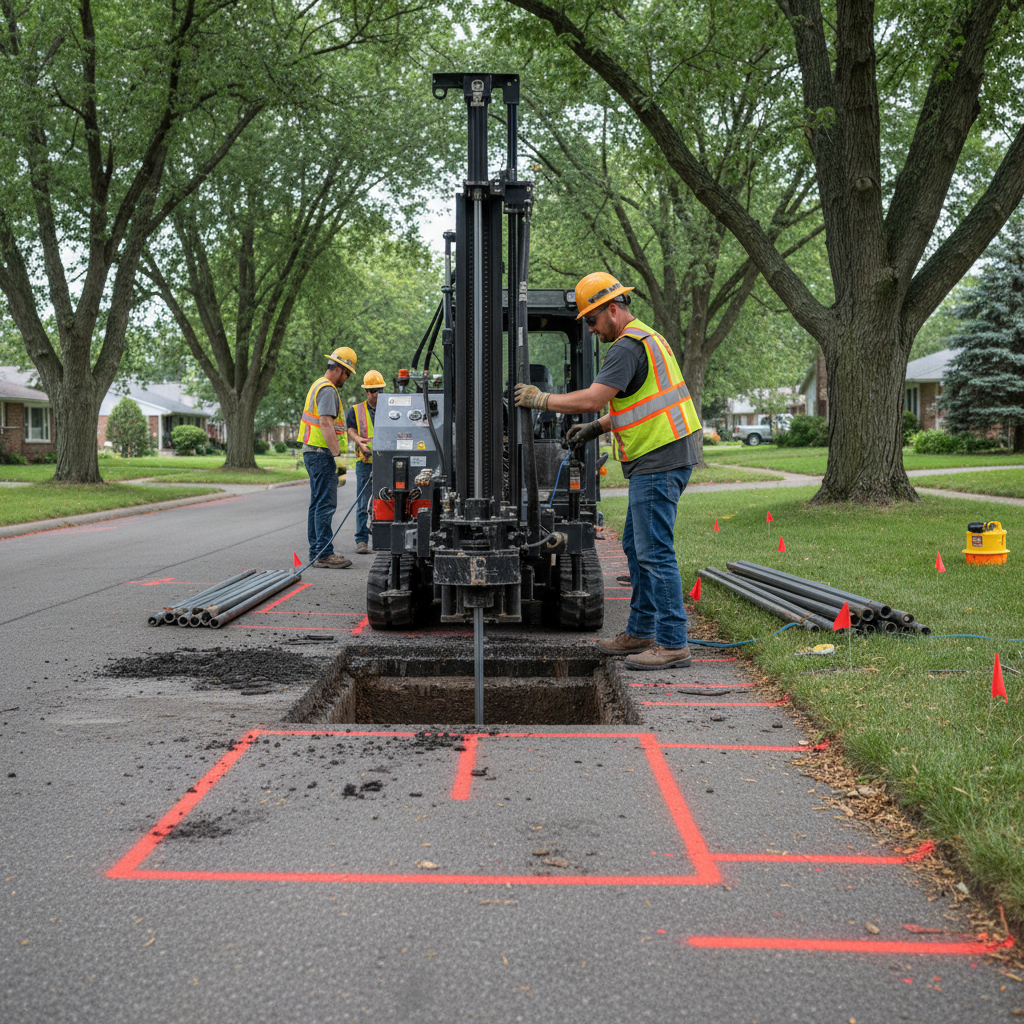
Horizontal directional drilling, or HDD, is one of the quietest revolutions on the modern jobsite. Instead of digging an open trench across a road, a creek, a parking lot, or somebody’s front lawn, a crew steers a drill head along a planned path underground, then pulls a new product back through the hole it made. Water mains, gas lines, fiber, conduit, sewer force mains, all of it goes in with the surface barely disturbed. Less digging, less traffic torn up, less property damaged, less time. From the curb it looks almost gentle: a rig, a few hoses, a little mud, a crew that hardly seems to break a sweat. That calm surface is exactly what makes the work deceiving.
Because everything that matters in HDD happens where you cannot see it. The drill head is fifty feet out and ten feet down, threading between utilities that were buried by other crews, on other days, that may or may not be where the records say. The single most serious thing a bore can hit is an energized electric line. When a steel drill string contacts an energized cable, the string and the ground around the rig can become energized too, and a worker touching the rig, the rods, or even standing on the wrong patch of ground can be electrocuted in an instant. That is the hazard this course centers on, alongside the buried-utility and crew-safety hazards that surround every shot. We build the whole thing around one promise: every worker home safe.
What you will learn
- How horizontal directional drilling works, why it is used to install utilities without open trenches, and why the hidden nature of the work shapes every hazard.
- The biggest hazard in HDD, an electric strike: how a drill string and the ground can become energized, why electrocution is the result, and exactly what to do (and not do) if a strike-alert system alarms.
- How to locate utilities before you bore: calling 811, reading locate marks, potholing to verify real depth and crossings, and building and following a sound bore plan.
- Drilling fluid (bentonite), how it works, and how to recognize and respond to inadvertent returns and a frac-out before they reach a basement, a stream, or a roadway.
- The mechanical and health hazards around the rig: pinch points and rotating drill rods, safe pipe handling, hearing protection, silica, traffic control, and tight communication between the operator and the locator.
Who this is for
Aligned with OSHA 29 CFR 1926 (construction, including Subpart P excavation principles for verifying buried utilities) and 1910.333 (selection and use of work practices around energized lines), plus 811 and common-ground-alliance best practice for safe excavation and trenchless work. Online awareness and information training that supports your employer’s required site-specific and equipment-specific training and is not a substitute for it. OccuPros | (469) 746-4040 | occupros.com | Every Worker Home Safe.
Course References
- OSHA standards and guidance applicable to Directional Drilling (HDD) Safety
- Employer written safety procedures and site-specific plans
- Manufacturer instructions, SDSs, permits, inspection forms, and emergency action plans when applicable
Applicable Industries:
OccuPros Safety Instructor Team
Every OccuPros course is developed and reviewed by our team of Certified Safety Professionals (CSP) and Safety Management Specialists (SMS) with 15+ years of field experience across construction, oil & gas, manufacturing, and general industry. Our instructors don't just teach safety - they've managed safety programs on active jobsites, conducted OSHA compliance audits, and published 184 safety course topics nationwide.
Before you buy
The practical questions, answered plainly.
Do I get a certificate?
Yes. When you finish the course and pass the assessment, your certificate of completion is available to download immediately from your dashboard. It carries a verification number.
How long do I have access?
Access to this course does not expire. It is self-paced, so you can start, stop and resume whenever you like, and your progress is saved between sessions.
What if I fail the assessment?
You can retake it. Knowledge checks run through the course and the final assessment draws from a larger question bank, so a retake will not simply repeat the same questions.
Does this replace hands-on training?
This course delivers the knowledge portion. Site-specific procedures, equipment-specific practice and any required practical evaluation remain your employer's responsibility, and the course is explicit about where those lines fall.
How often does this training need repeating?
The recommended refresher cadence for this topic is annually. Retraining is also triggered by a change in process or equipment, or by an observed gap in an employee's knowledge.
Can I buy this for my whole crew?
Yes. Choose "My team" on this page to buy seats instead of a single enrolment. You become the team administrator, assign seats from your Team Portal as people join, and volume pricing applies automatically at 5 seats and again at 10.
Frequently Asked Questions
What topics are included in the Directional Drilling (HDD) Safety course?
It covers the hazards of horizontal directional drilling, including underground utility strikes, inadvertent returns, drilling fluid handling, and electrical strike response. You will also learn about locating buried lines, site setup, and crew communication. The content aligns with general OSHA excavation and utility work practices.
Who should take HDD safety training?
It is designed for directional drill operators, locators, and crew members on underground boring and utility installation projects, as well as their supervisors. Anyone working around an HDD operation who could be exposed to strike or entrapment hazards can benefit.
Can I buy seats for my whole crew?
Yes. OccuPros offers group and team seats so you can enroll multiple workers under one purchase and manage them together. Contact us for team pricing if you need to train a full crew.
Is the course available in Spanish?
Many OccuPros courses are offered in Spanish. If you need this training in Spanish for your crew, check the course page or contact us to confirm current availability.