OccuPros Safety Academy | Online Theory
Benzene Awareness
It is clear, it smells almost sweet, and it can give a worker leukemia years after the shift is over. This course teaches you to recognize benzene, respect what it does to the body, and work safely inside your employer’s program.
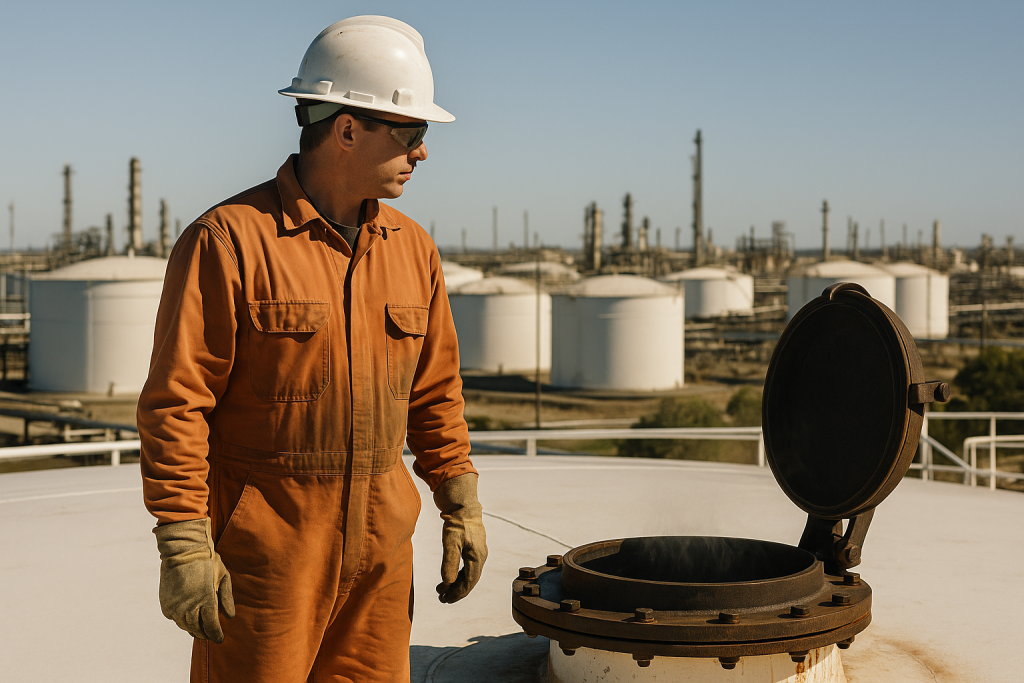
Benzene is one of the most useful chemicals in industry and one of the most dangerous to the people who work around it. It is a clear, colorless liquid with a faint sweet smell, it evaporates fast, it catches fire easily, and it hides in plain sight inside crude oil, gasoline, solvents, and the vapors that rise off a tank you just opened. A refinery operator, a fuel hauler, a lab tech, a coke-oven worker, a tank gauger: all of them can meet benzene on a normal day and never feel a thing. That is the trap. Benzene does not announce itself the way a hot surface or a sharp edge does. The harm it does is quiet, it builds over years, and by the time the body shows it, the damage is already done.
Here is what every worker needs to understand up front. Benzene is a known human carcinogen. Long-term exposure is firmly linked to leukemia and other serious blood disorders, and high concentrations can knock a person out or kill them in the moment. You cannot smell your way to safety, because your nose stops noticing the odor long before the level is safe. So protection does not come from your senses. It comes from understanding where benzene lives, trusting the monitoring and controls your employer puts in place, using the right respirator under a real program, and knowing how to recognize and report a problem before it reaches your lungs. This course gives you that awareness so you can be a careful, informed part of the team that keeps everyone breathing clean air.
What you will learn
- What benzene is, why it is so widely used, and the properties (clear, sweet-smelling, volatile, highly flammable) that make it both useful and hazardous.
- Where workers actually meet benzene: oil and gas, refineries, chemical plants, fuel and gasoline handling, labs, coke ovens, and tank gauging.
- Why benzene is dangerous: it is a known human carcinogen tied to leukemia and blood disorders, with acute nervous-system effects at high concentrations.
- How benzene gets into the body (inhalation first, skin second), why you cannot rely on smell, and what OSHA’s exposure limits mean for you.
- How monitoring, engineering controls, regulated areas, signage, the SDS, PPE and respirators, and recognize-and-report all work together to protect you.
Who this is for
Aligned with OSHA 29 CFR 1910.1028, Benzene. Online awareness and information training that supports your employer’s required benzene compliance program, exposure monitoring, medical surveillance, respirator program, and site-specific training, and is not a substitute for them. OccuPros | (469) 746-4040 | occupros.com | Every Worker Home Safe.
Course References
- OSHA standards and guidance applicable to Benzene Awareness
- Employer written safety procedures and site-specific plans
- Manufacturer instructions, SDSs, permits, inspection forms, and emergency action plans when applicable
Applicable Industries:
OccuPros Safety Instructor Team
Every OccuPros course is developed and reviewed by our team of Certified Safety Professionals (CSP) and Safety Management Specialists (SMS) with 15+ years of field experience across construction, oil & gas, manufacturing, and general industry. Our instructors don't just teach safety - they've managed safety programs on active jobsites, conducted OSHA compliance audits, and published 184 safety course topics nationwide.
Before you buy
The practical questions, answered plainly.
Do I get a certificate?
Yes. When you finish the course and pass the assessment, your certificate of completion is available to download immediately from your dashboard. It carries a verification number.
How long do I have access?
Access to this course does not expire. It is self-paced, so you can start, stop and resume whenever you like, and your progress is saved between sessions.
What if I fail the assessment?
You can retake it. Knowledge checks run through the course and the final assessment draws from a larger question bank, so a retake will not simply repeat the same questions.
Does this replace hands-on training?
This course delivers the knowledge portion. Site-specific procedures, equipment-specific practice and any required practical evaluation remain your employer's responsibility, and the course is explicit about where those lines fall.
How often does this training need repeating?
The recommended refresher cadence for this topic is annually. Retraining is also triggered by a change in process or equipment, or by an observed gap in an employee's knowledge.
Can I buy this for my whole crew?
Yes. Choose "My team" on this page to buy seats instead of a single enrolment. You become the team administrator, assign seats from your Team Portal as people join, and volume pricing applies automatically at 5 seats and again at 10.
Frequently Asked Questions
What does the Benzene Awareness course cover?
It covers what benzene is, where it is found, and the health effects of both short- and long-term exposure. You will learn about exposure controls, monitoring, hygiene practices, and protective equipment basics. The training references the general OSHA benzene standard.
Who should take benzene awareness training?
It is intended for workers in refining, chemical, fuel, and related industries who may be exposed to benzene, plus their supervisors. Anyone helping manage benzene exposure controls will benefit. No prerequisites are required.
Is the course self-paced and online?
Yes. It is delivered fully online and self-paced, so you can complete it on your own schedule. It works across phones, tablets, and computers.
Do I get a certificate when I finish?
Yes. You can download a digital Certificate of Completion at the end. It records that you completed the benzene awareness training.