OccuPros Safety Academy | Online Theory
Overhead Crane and Hoist Safety
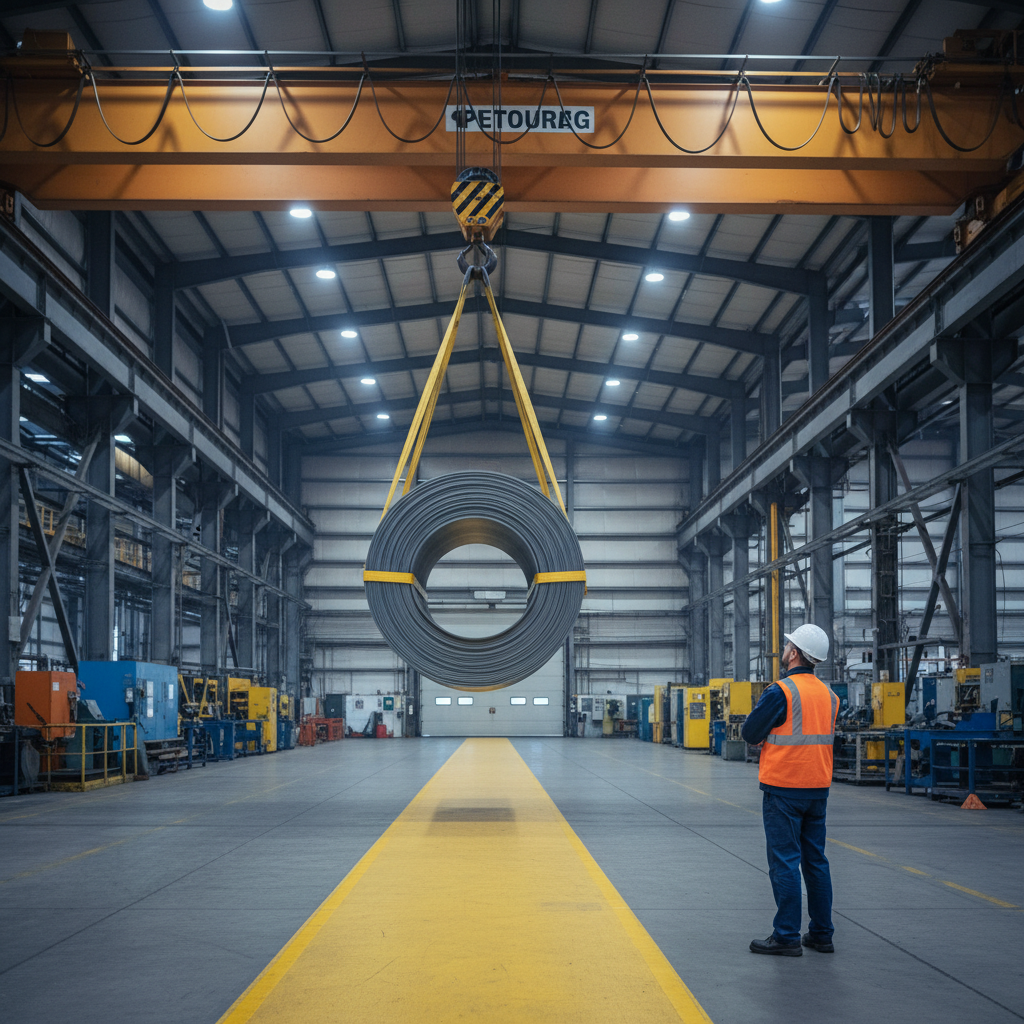
An overhead crane moves loads that can weigh more than a car, often above the heads of the people you work with every day. This course teaches you the thinking behind every safe lift, so the load goes where it should and everyone walks away.
An overhead crane is one of the most useful machines on any worksite and one of the most unforgiving. It lifts loads no person could ever move by hand, swings them across a bay in seconds, and sets them down on a dime. That power is exactly the point. It is also exactly the danger. When a lift goes wrong, it goes wrong fast and it goes wrong heavy. A dropped load, a snapped sling, a hoist that runs into its own limit, a worker caught in the path: these are not fender-bender events. They are the kind that change a family forever, and they almost always trace back to something that could have been caught before the lift ever started.
Here is the encouraging part. The serious crane and hoist incidents are not random. They cluster around the same short list of failures every time. A hook with a cracked latch nobody checked. A capacity nobody read. A load nobody centered. A path nobody cleared. A person nobody warned. Every one of those is a decision a person made or skipped, which means a trained person can make a different one. This course takes the safe lift apart piece by piece, from the daily inspection to the final landing, so you can see the hazard before it becomes an incident and run every lift like the load is hanging over someone you love. Because on most days, it is.
What you will learn
- How overhead bridge, gantry, and jib cranes and their hoists work, and where the real failure points hide.
- What OSHA 29 CFR 1910.179 and ASME B30.2 require, and what the daily pre-use inspection has to cover: hooks, latches, wire rope and load chain, brakes, limit switches, controls, and warning devices.
- Why you never exceed the rated capacity, and how to read the load and the load chart before the hook ever takes weight.
- How to rig a load over its center of gravity, why you never travel a load over people, and how taglines, smooth control, and no side-pulling keep a load honest.
- How to use the audible warning and a clear travel path, how do-not-operate tags work, and why no one ever rides the hook or the load.
Who this is for
Aligned with OSHA 29 CFR 1910.179 (Overhead and Gantry Cranes) and ASME B30.2 (Overhead and Gantry Cranes). Online awareness and theory training that supports your employer’s required hands-on, equipment-specific operator training, evaluation, and authorization, and is not a substitute for it. OccuPros | (469) 746-4040 | occupros.com | Every Worker Home Safe.
Course References
- OSHA standards and guidance applicable to Overhead Crane & Hoist Safety
- Employer written safety procedures and site-specific plans
- Manufacturer instructions, SDSs, permits, inspection forms, and emergency action plans when applicable
Applicable Industries:
OccuPros Safety Instructor Team
Every OccuPros course is developed and reviewed by our team of Certified Safety Professionals (CSP) and Safety Management Specialists (SMS) with 15+ years of field experience across construction, oil & gas, manufacturing, and general industry. Our instructors don't just teach safety - they've managed safety programs on active jobsites, conducted OSHA compliance audits, and published 184 safety course topics nationwide.
Before you buy
The practical questions, answered plainly.
Do I get a certificate?
Yes. When you finish the course and pass the assessment, your certificate of completion is available to download immediately from your dashboard. It carries a verification number.
How long do I have access?
Access to this course does not expire. It is self-paced, so you can start, stop and resume whenever you like, and your progress is saved between sessions.
What if I fail the assessment?
You can retake it. Knowledge checks run through the course and the final assessment draws from a larger question bank, so a retake will not simply repeat the same questions.
Does this course fully certify me?
No, and that matters. This is the online knowledge portion. Full qualification also requires a hands-on practical evaluation conducted by your employer or by OccuPros in person. The course tells you exactly what that evaluation has to cover.
How often does this training need repeating?
The recommended refresher cadence for this topic is annually. Retraining is also triggered by a change in process or equipment, or by an observed gap in an employee's knowledge.
Can I buy this for my whole crew?
Yes. Choose "My team" on this page to buy seats instead of a single enrolment. You become the team administrator, assign seats from your Team Portal as people join, and volume pricing applies automatically at 5 seats and again at 10.
Frequently Asked Questions
What does the Overhead Crane and Hoist Safety Knowledge Module cover?
It covers the classroom knowledge for overhead cranes and hoists, including load handling, rigging basics, hand signals, inspection points, and recognizing hazards. It is the knowledge portion and does not include hands-on evaluation. The content aligns with general OSHA overhead crane requirements under 29 CFR 1910 and 1926.
Does this module make me a qualified crane operator?
No. This is a knowledge module that covers the classroom training component. Employers must still provide hands-on training and a practical evaluation on the specific equipment before an operator is considered qualified. Use this to complete the knowledge portion of your program.
Is a certificate provided for the knowledge module?
Yes. You can download a digital Certificate of Completion documenting the knowledge portion once you finish. It is a training record and not a standalone operator qualification.
Can I buy seats for multiple operators?
Yes. Group and team seats are available so you can enroll and track several workers under one account. Contact us through the site for team pricing and setup.